The capital of Siam
More than 400 years, until its destruction in the 18th century.
The historic capital of Siam, a World Heritage Site, seven versions of the same day, from 1,008 THB.
Check availability and priceFrom 1,008 THB, when booked in advance.
The capital of Siam, and what remains of it
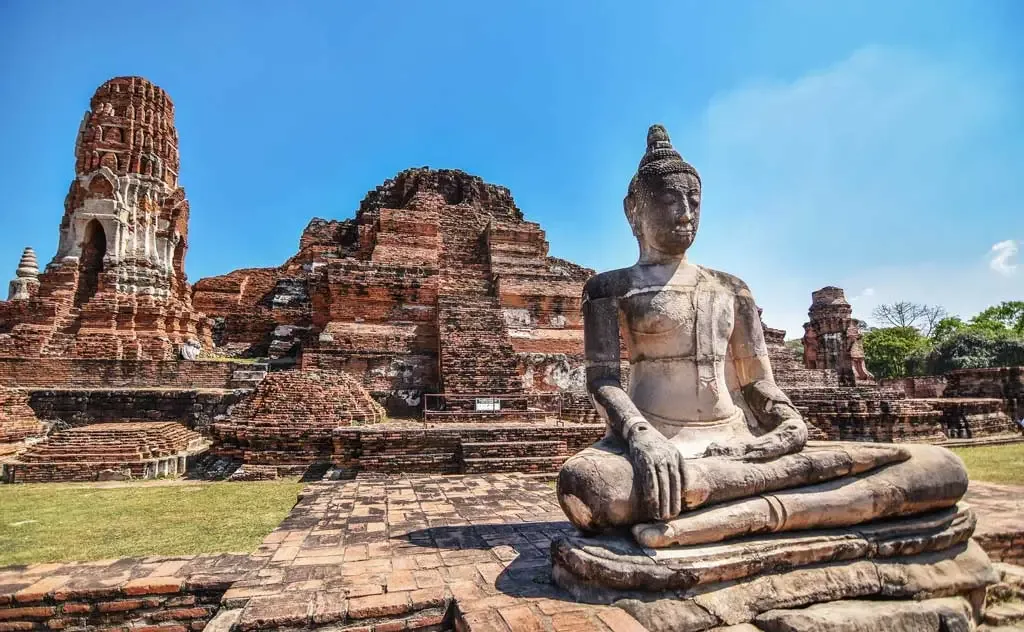
Ayutthaya was the capital of Siam for more than four hundred years, until it was destroyed in war in the 18th century. What remains is a field of temples, chedis and ruins, and it A UNESCO World Heritage Site.
The most recognizable site is a stone Buddha head caught among the roots of a fig tree, and it grew with them over hundreds of years.
Bang Pa-In It's the royal summer palace along the way, and it appears in the long version. It isn't a ruin — it's a functioning palace with gardens.
More than 400 years, until its destruction in the 18th century.
A UNESCO site. Most of the sites are open-air ruins.
In some versions, getting there itself is part of the day.
The royal summer palace, in the long version.
and that's the difference that's easiest to miss
1,008: temples. A classic tour of the historic site. For those who come for Ayutthaya itself.
1,490: animals and Thai costume. This isn't a temple tour. The day is built around meeting animals and photos in traditional costume. Suitable for families and those looking for an experience rather than history.
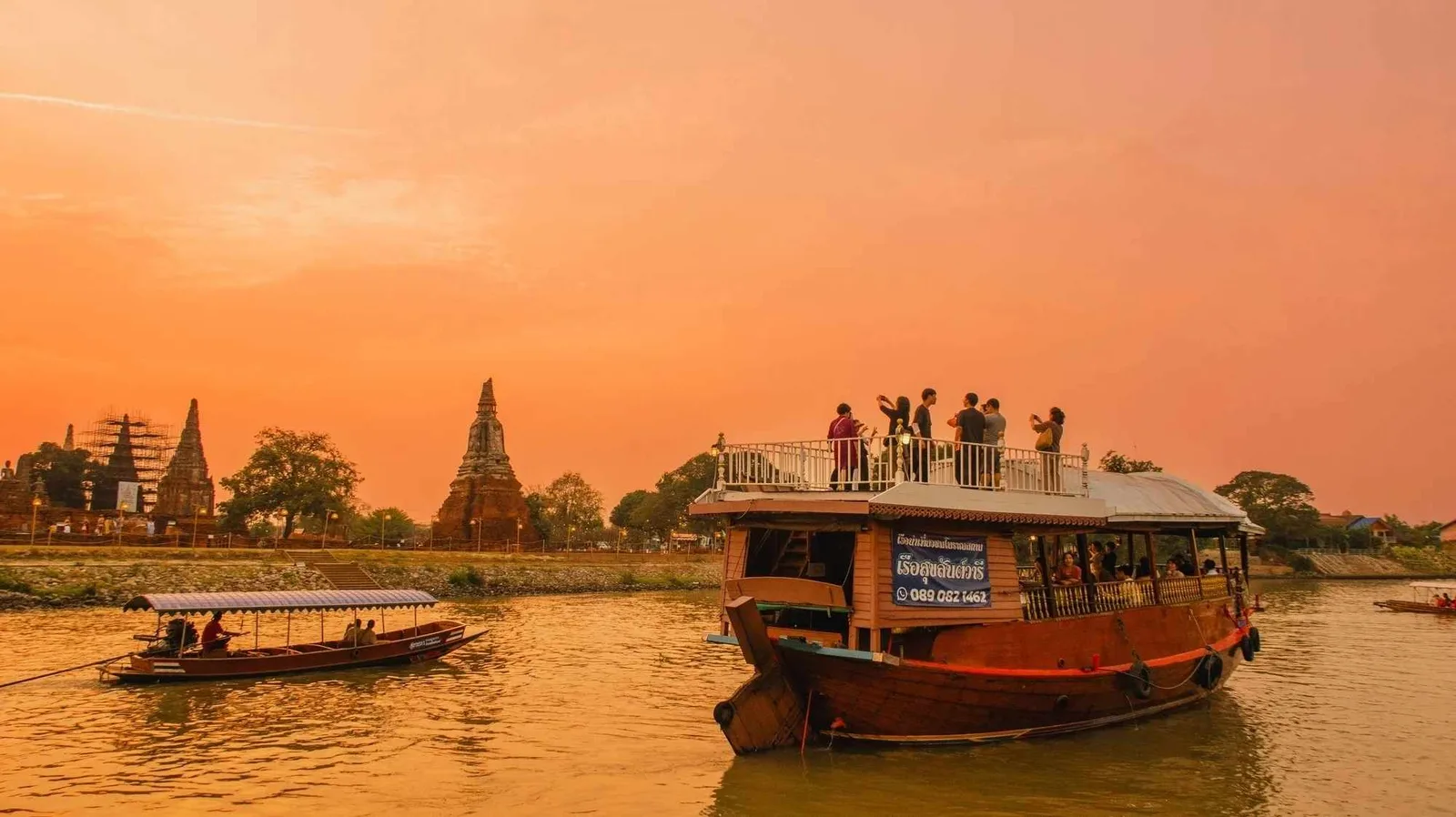
1,500: a river cruise. Here, getting there is the experience: a cruise on the Chao Phraya, with Ayutthaya at the end.
All three at roughly the same price, and all three are a different day. Anyone who chooses by the number may end up at costumes when they wanted ruins.
When is it worth paying more
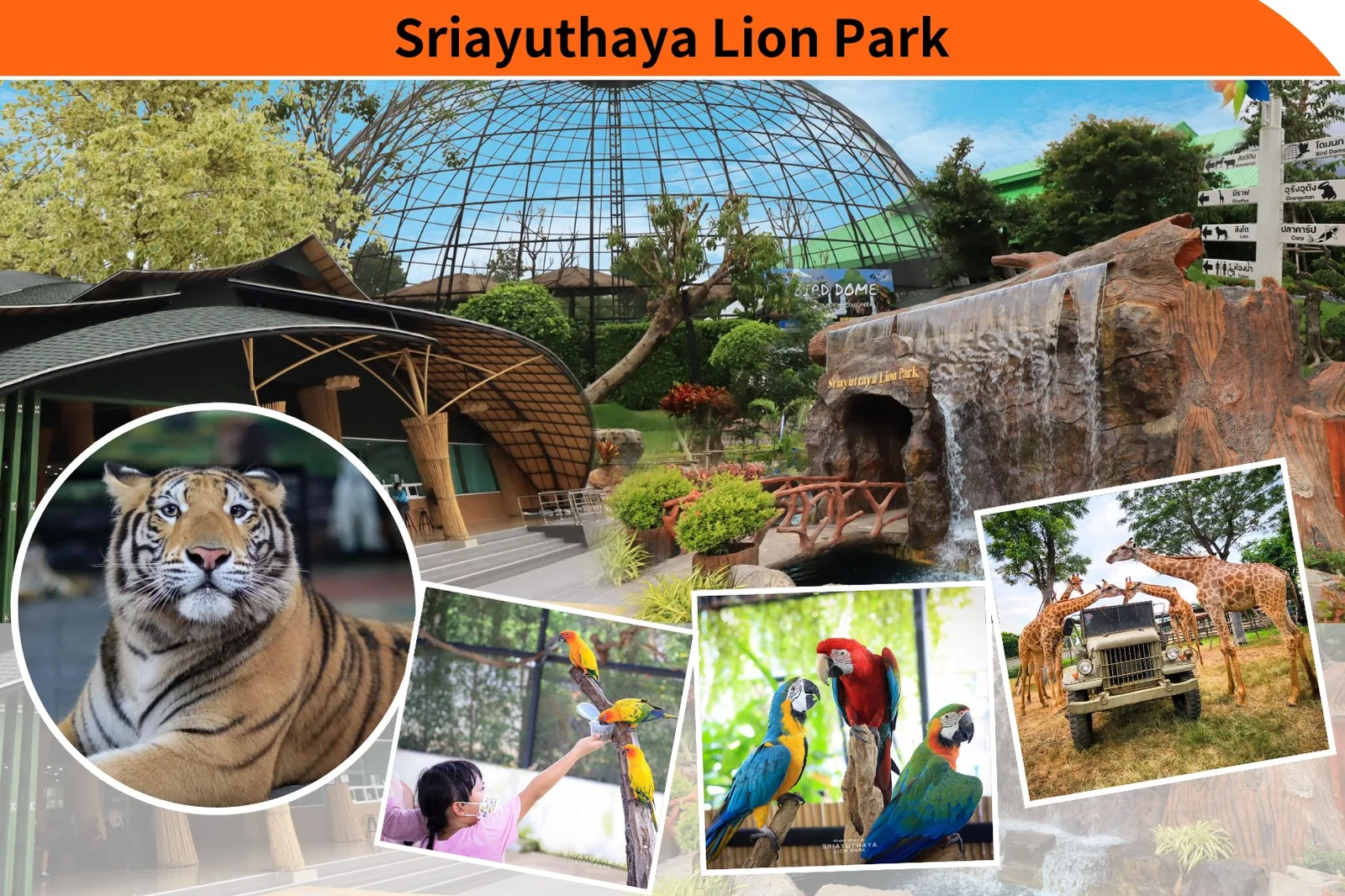
1,680, the historic city and the lion park. the combination that keeps kids going through a whole day, when temples alone are a bit dry for them.
2,924, with Bang Pa-In Palace and a cruise. The fullest day that isn't private: ruins, a functioning palace and a river.
5,000, private, with the giant Buddha. A car to yourselves and your own pace. Write to us how many you are and we will come back with the final price Before you book.
and why that's what makes it what it is
Ayutthaya was The capital of Siam for 417 years, from 1350 to 1767. At its peak it was considered one of the largest cities in the world, and its port received merchants from Portugal, Holland, France, Persia and China.
In the year In 1767 the city was conquered and burned, and the capital was moved south, first to Thonburi and then to Bangkok. Ayutthaya was never rebuilt, and the ruins remained in place.
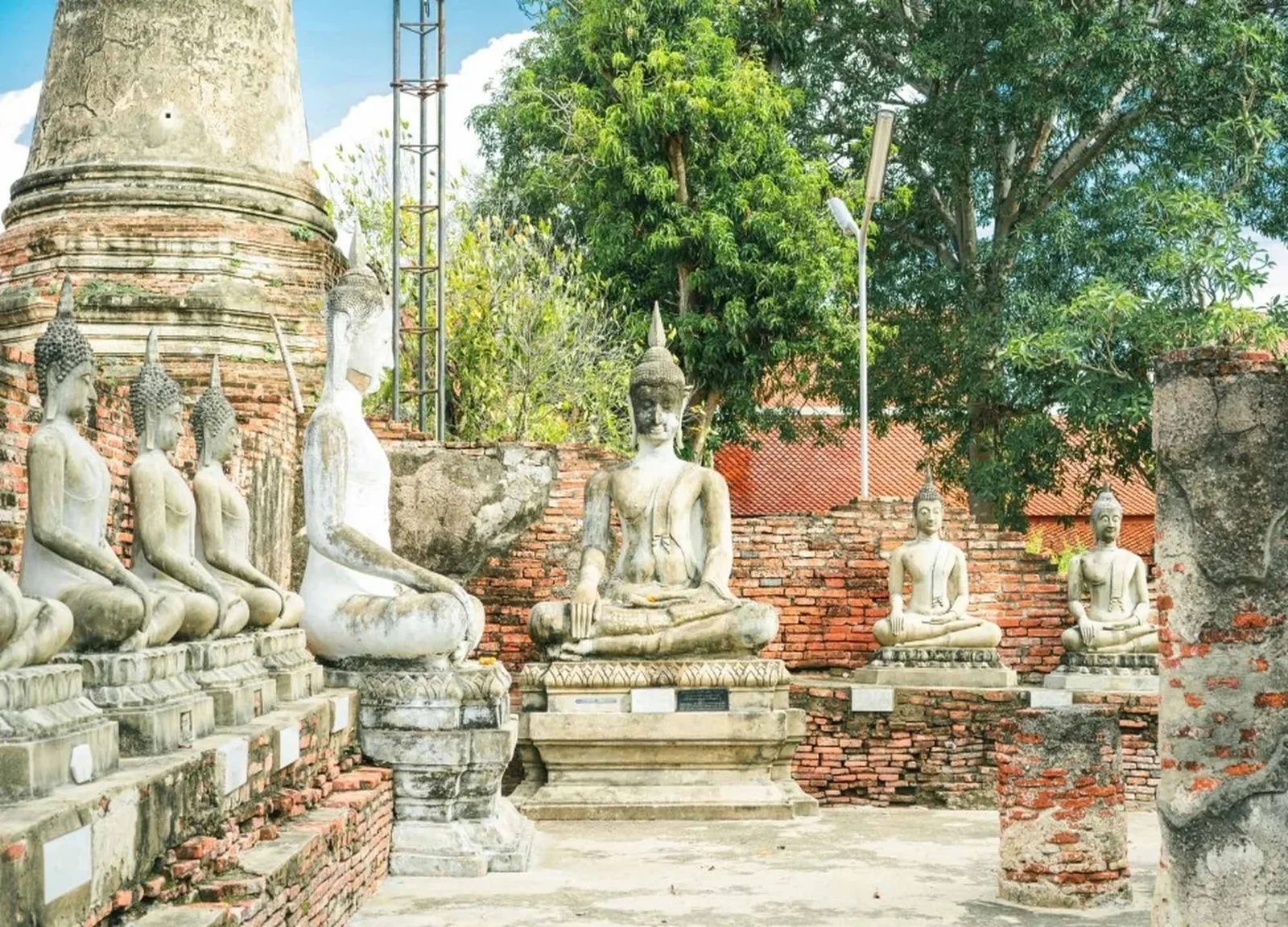
This is what sets it apart from Bangkok's temples: here there's no shiny gold and colorful roofs, but rather Red bricks, worn chedis and headless Buddha statues, the heads were looted or destroyed. The site was declared a UNESCO World Heritage Site.
The city is located about80 kilometers north of Bangkok, an hour to an hour and a half's drive. It's built on an island surrounded by three rivers.
and what's special about each one
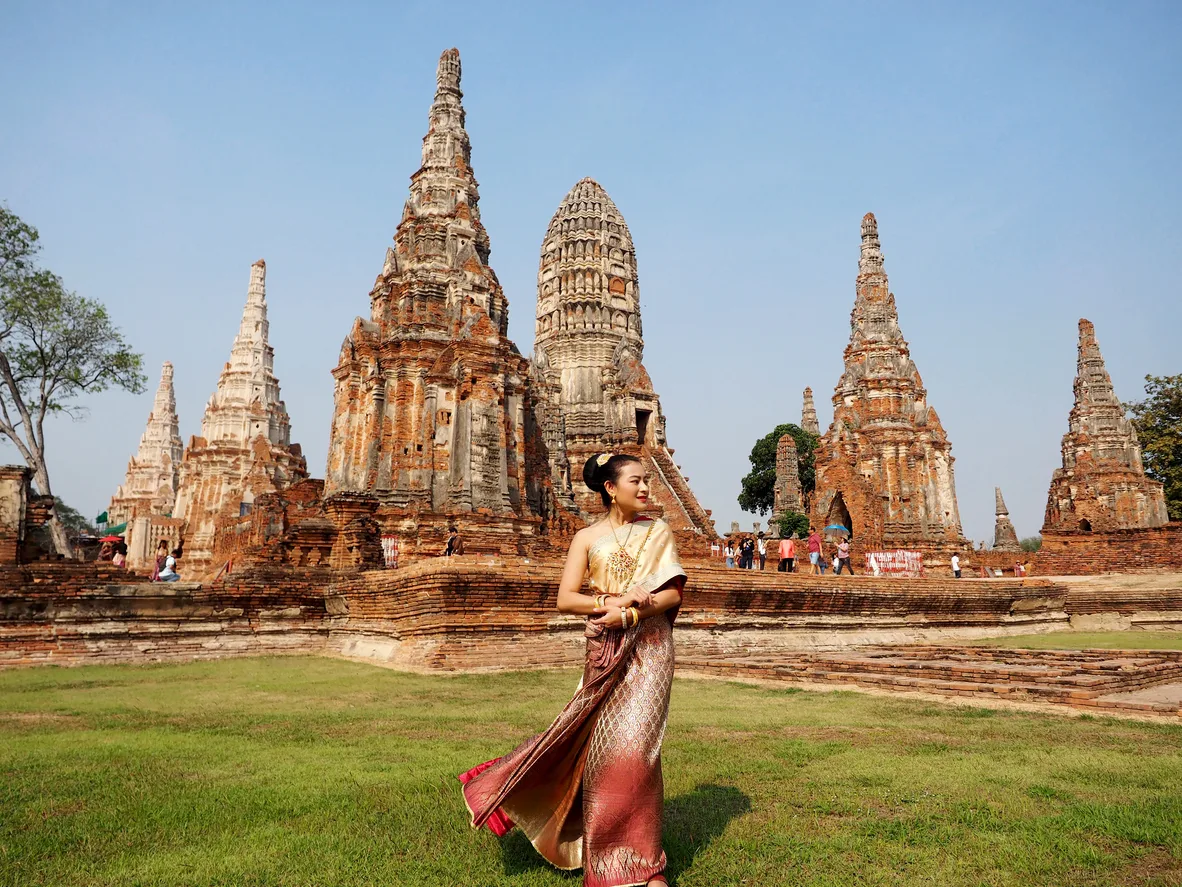
Ayutthaya's three most recognizable chedis, inside the former royal palace complex. This is the image that represents the city.
Here you will find The Buddha head entwined in fig-tree roots, Ayutthaya's most famous image.
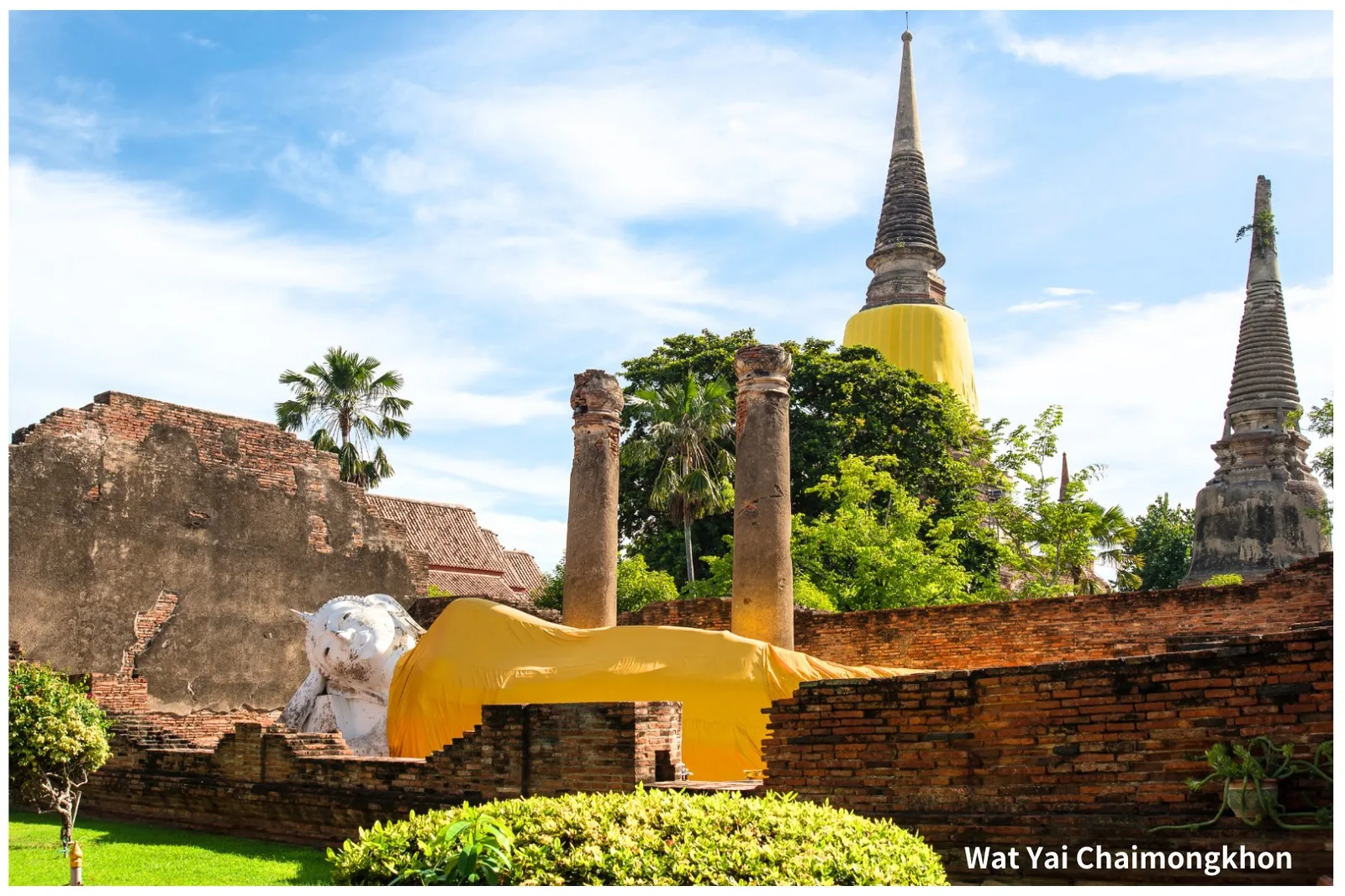
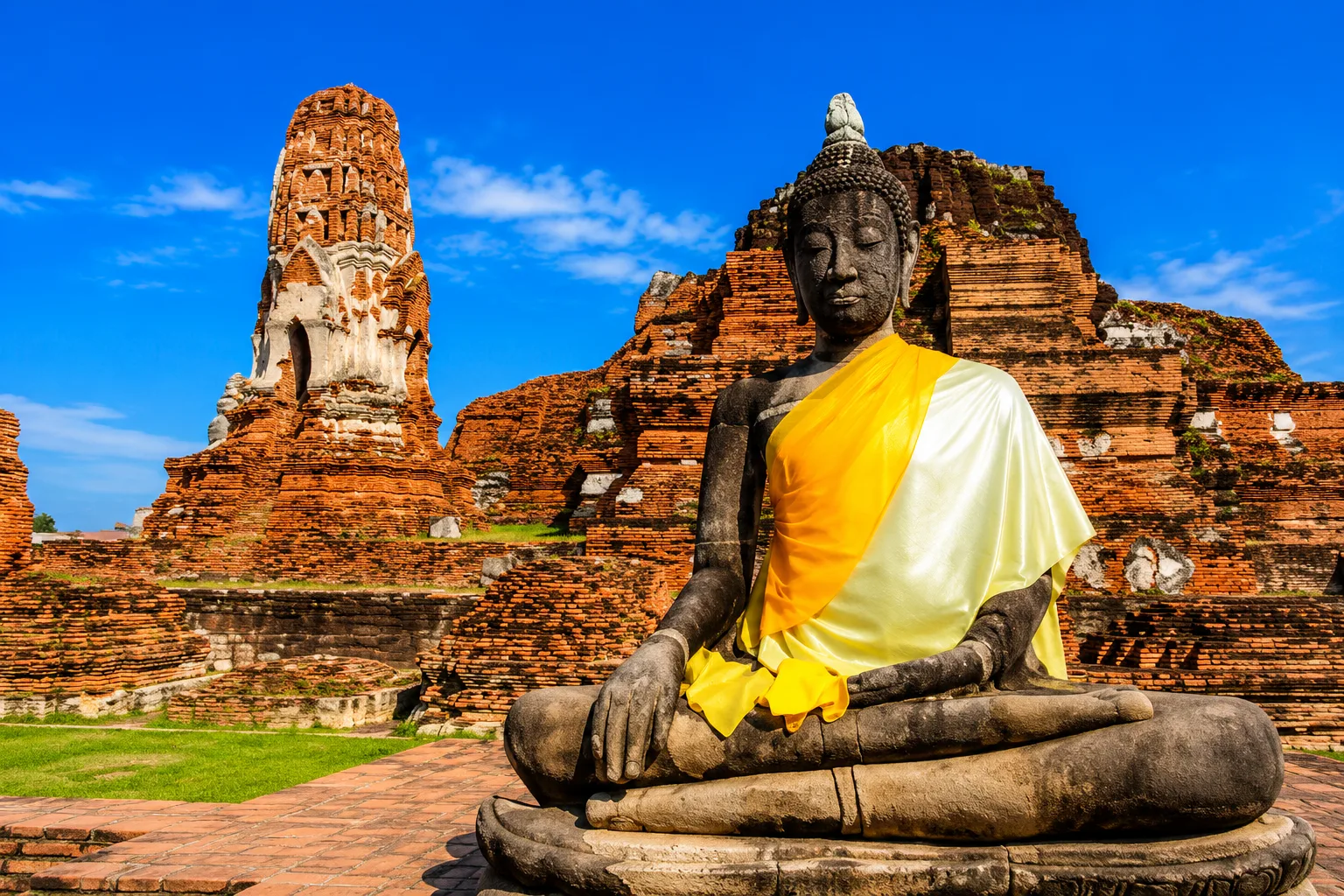
a tall chedi you can climb, and a long row of Buddha statues wrapped in yellow cloth. Still an active temple.
A complex on the riverbank in adobe style. The best place for sunset in Ayutthaya.
An open safari with giraffes, lions and birds. An attraction separate from the temples, and some tours include it.
Some tours return to Bangkok by cruise, or circle the island by boat. A completely different angle on the city.
A religious site, and a site exposed to the sun
The temples are religious sites even when they're ruins. Clothing covering shoulders and knees is required, for men and women alike, and at some active temples shoes must also be removed at the hall entrance.
It's not allowed to bring Thai costumes from home for some of the sites. There are organized rental services there, and bringing a private costume may result in a fine.
The site Almost completely exposed to the sun. There's no shade among the ruins, and the red bricks store heat. A hat, water and closed shoes aren't a recommendation but a necessity.
Early morning and sunset are the most comfortable times, and they're also the best light for photography. At midday it's harsh.
Admission fees are charged separately at each temple, and are usually not included in the tour.






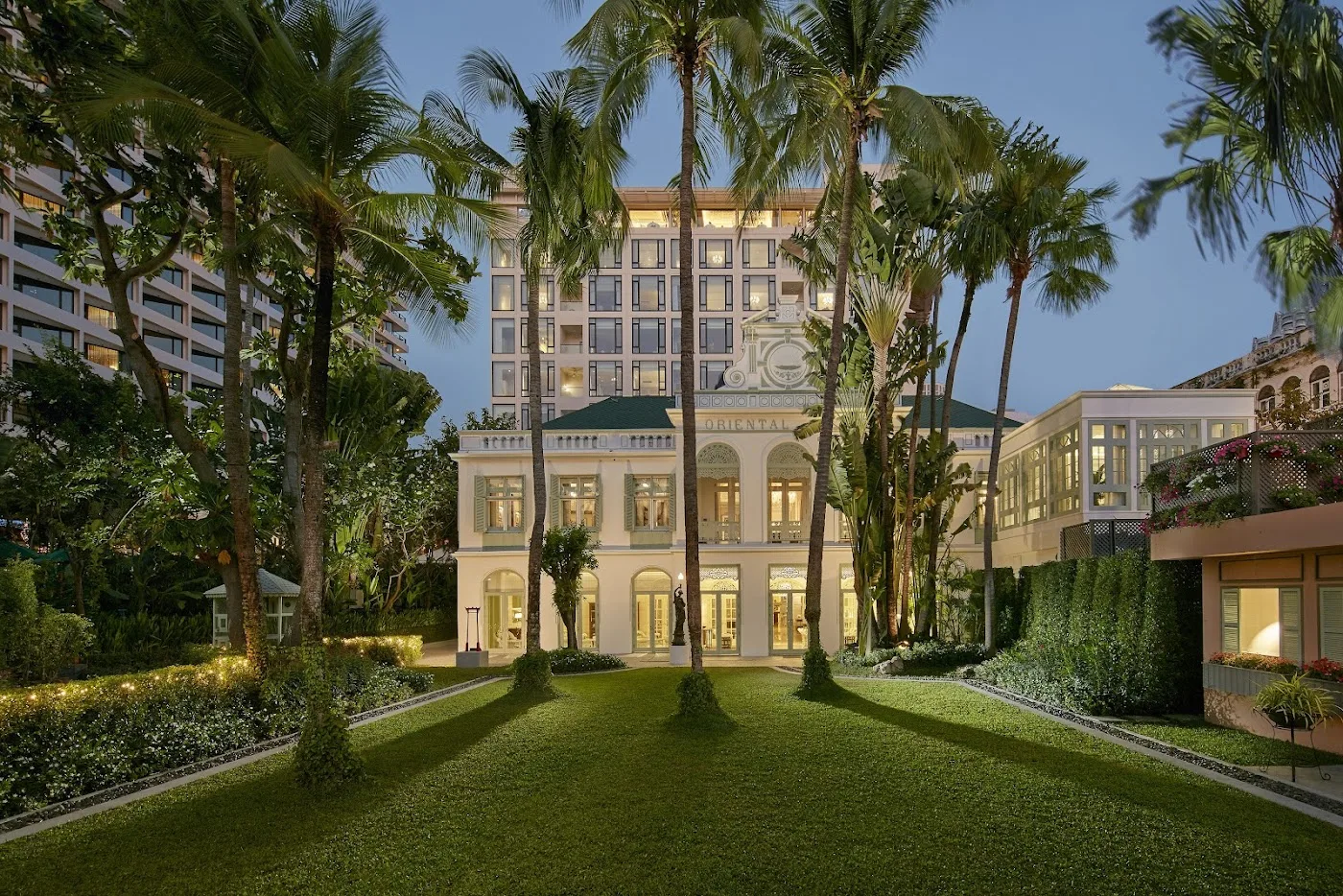
An iconic luxury hotel on the banks of the Chao Phraya, with flawless service, magnificent rooms and leading restaurants
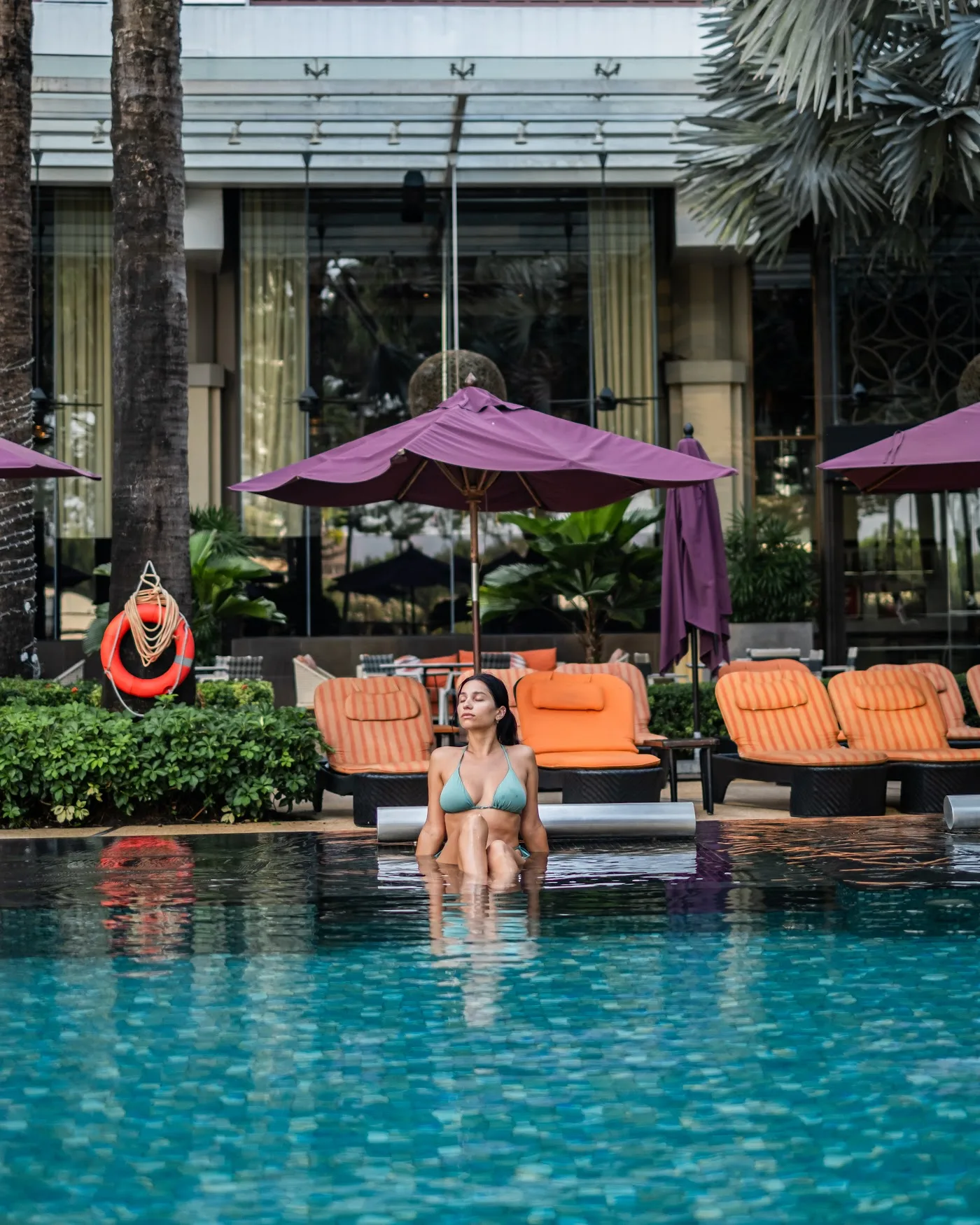
A luxury hotel with stunning river views, spacious rooms, indulgent spa facilities and gourmet restaurants
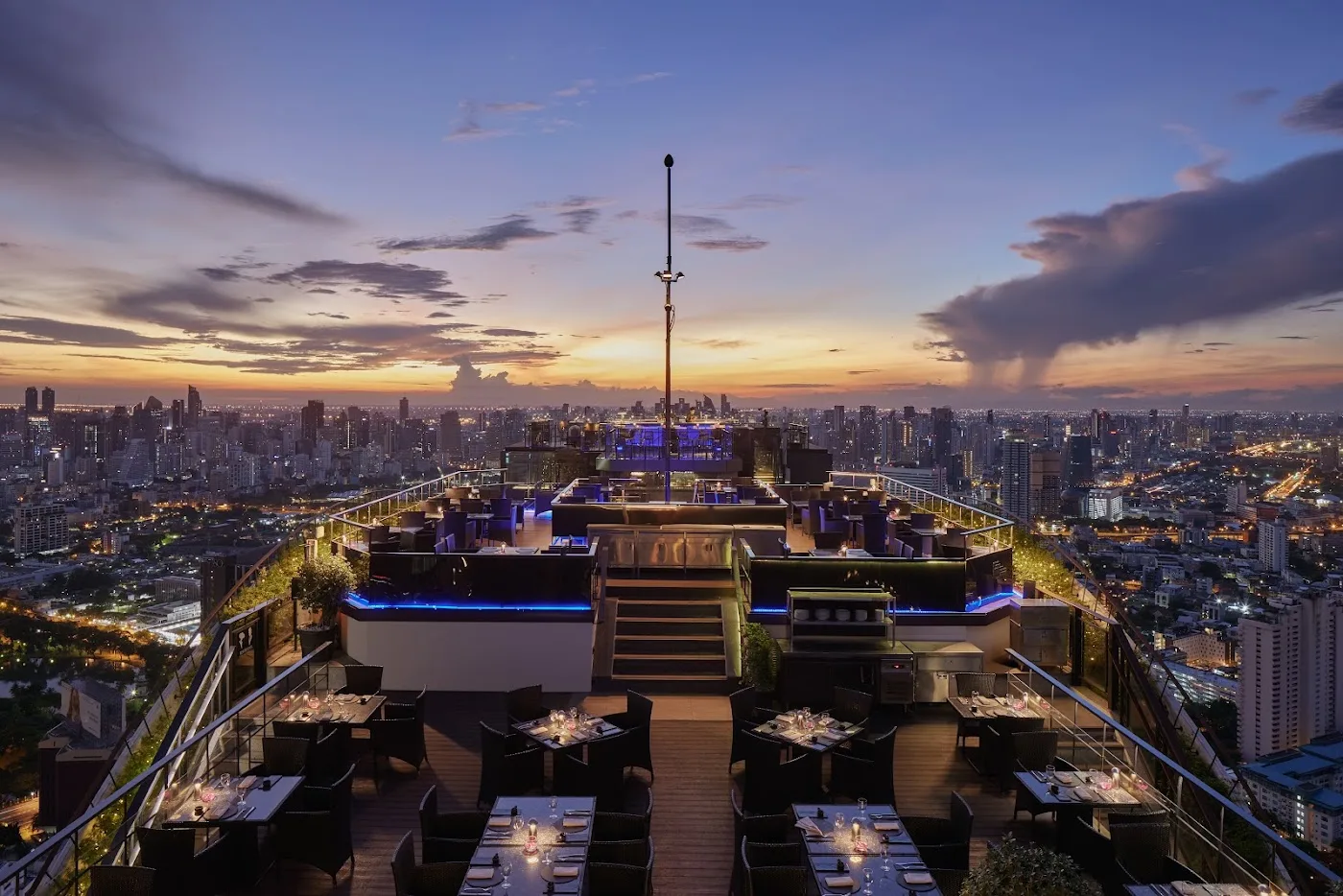
A luxury hotel in the city centre with a famous rooftop restaurant, an infinity pool and panoramic views of Bangkok
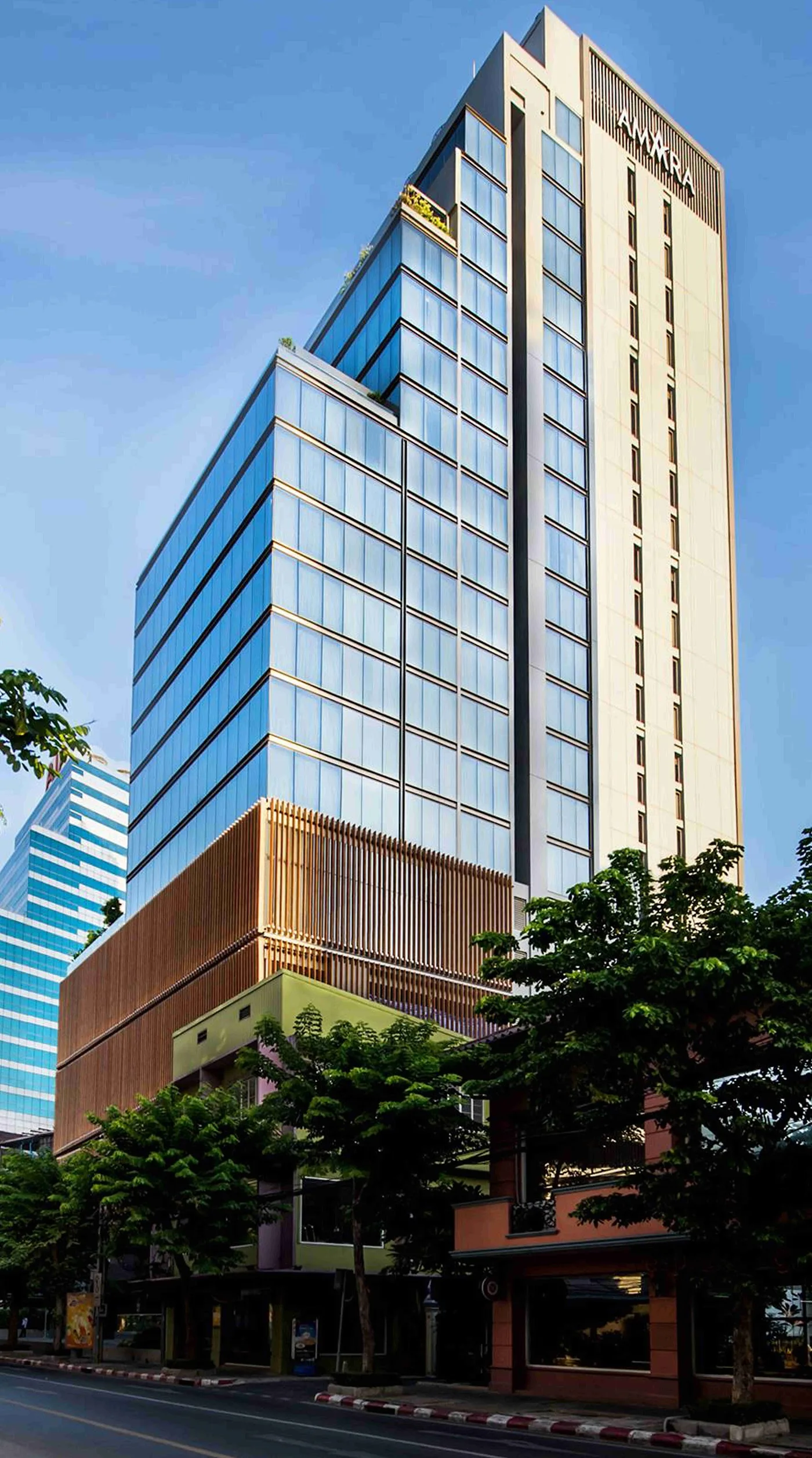
A modern hotel in a great location, with an impressive rooftop pool, comfortable rooms and tasty breakfasts.
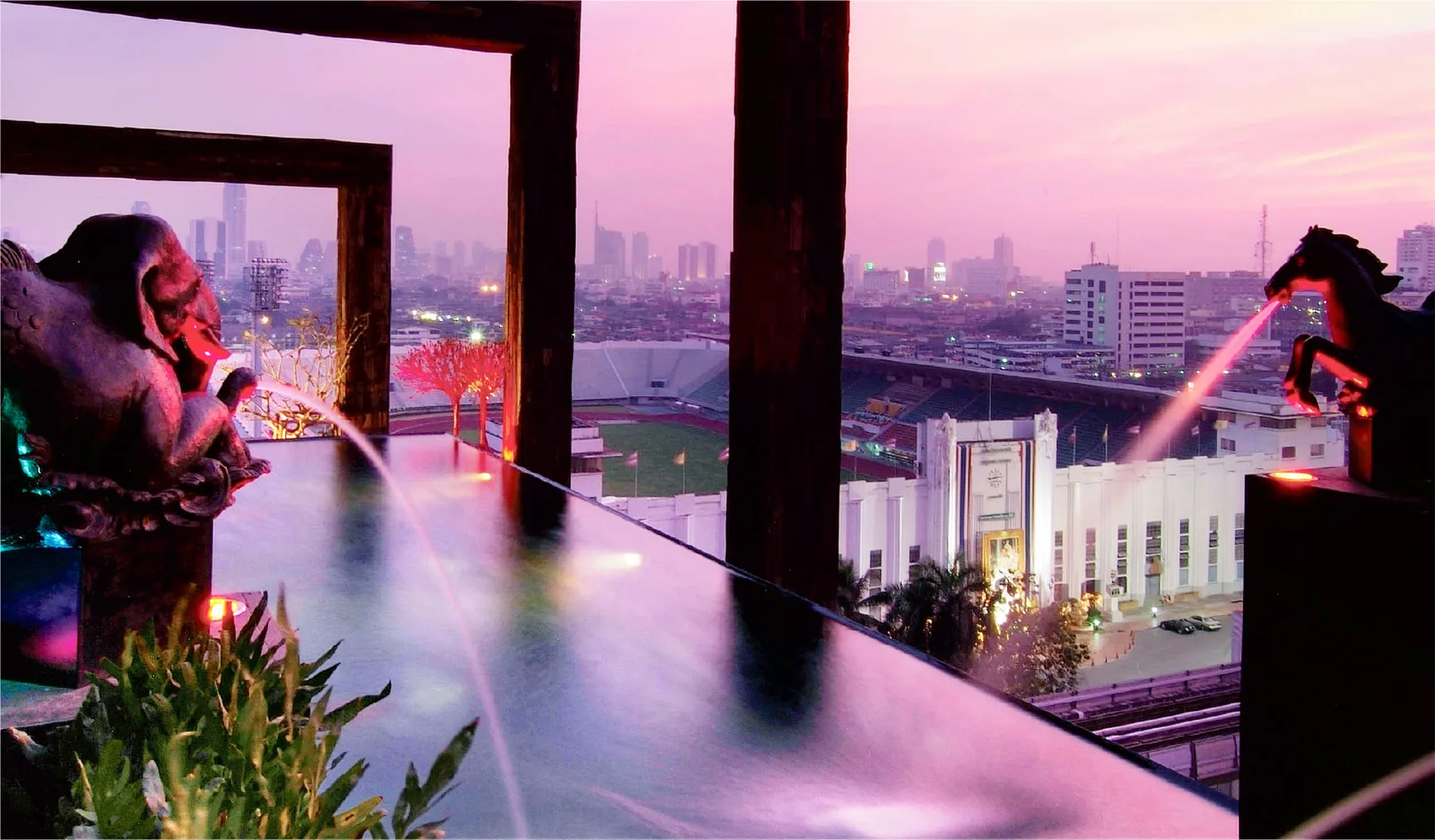
A designed boutique hotel in the Siam area, with a special atmosphere, a rooftop pool and an excellent Italian restaurant.
When you send an inquiry, we keep the details you provided (name, phone, email and trip details) to handle your inquiry, get back to you and for the uses you approved in the form, as set out in the Privacy policy. Beyond that, two things need your permission: Analytics of pages viewed, and Embedded content such as videos and maps that come from other services and can see your IP address.
Your choice is saved in your browser, and you can review and change it at any time in the privacy policy.