08:30 · Pick-up
Pick-up from the hotel in Bangkok, and departure toward Amphawa.
Two days from Bangkok: the floating market, the folding train market, Erawan Falls, an open safari, and the Kwai River bridge, with accommodation at a resort on the river.
Check availability and priceFrom 4,800 THB, when booked in advance.
a floating market, a sugar factory, swimming monkeys, and a market on the tracks
Pick-up from the hotel in Bangkok, and departure toward Amphawa.
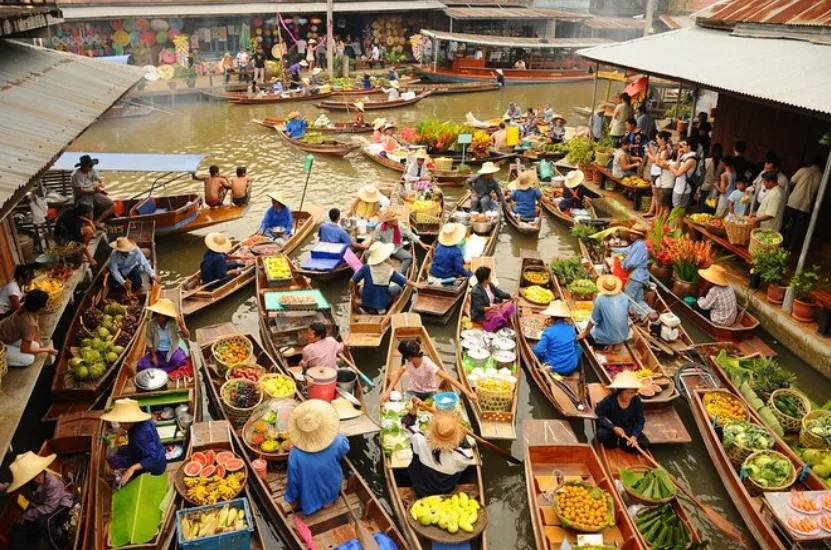
Damnoen Saduak, and a longtail boat ride among the vendor boats: included.
A traditional factory for producing sugar from real coconuts, with a tasting.
included in the price.
sailing at the river mouth among the mangroves, and the monkeys approach the boat. On the way back: the oyster farm.
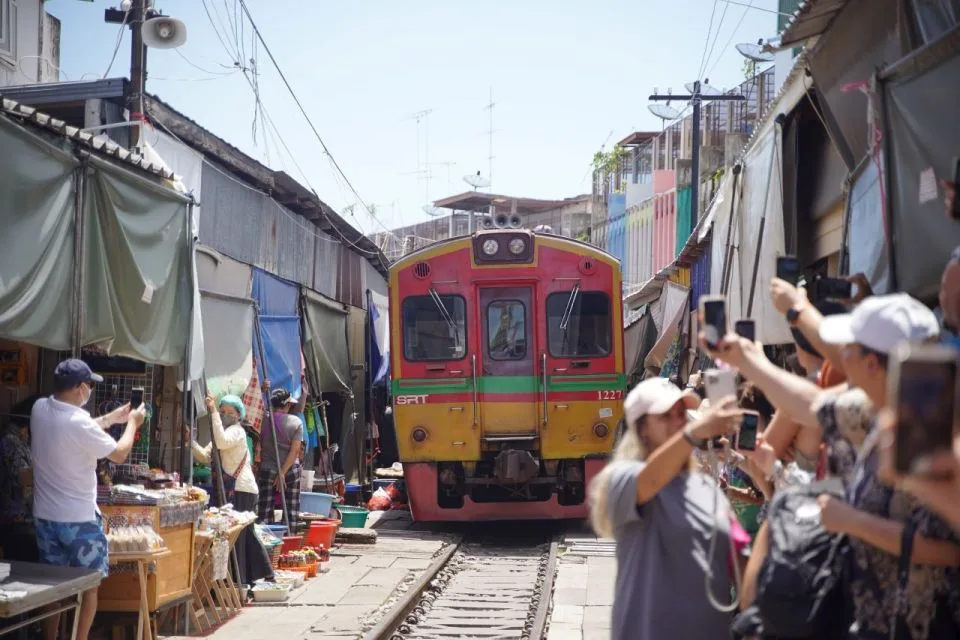
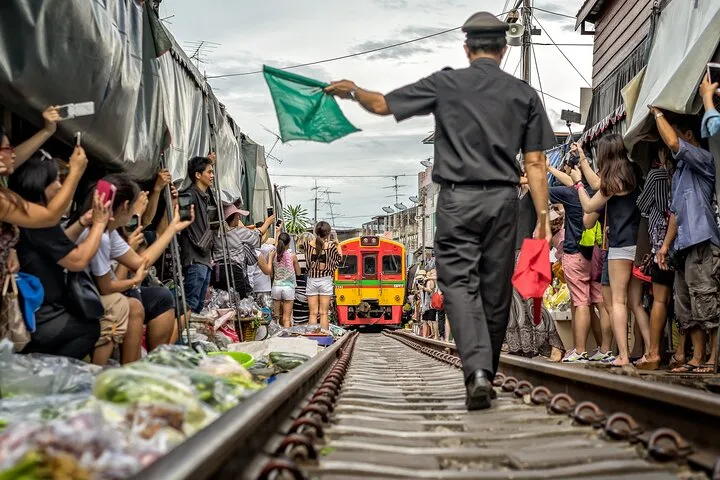
"Talat Rom Hup": the folding market, on an active track.
with a refreshment stop along the way.
at a resort in Kanchanaburi.
at a local restaurant in the city. Included in the price.
and from there back to Bangkok
and departure to the Erawan Falls reserve.
A walking trail up the reserve, among waterfalls and clear water pools. you can and it's recommended to bathe in the waterfalls and natural slides.
leaving the waterfalls on a two-story raft on the Kwai River.
a meal included at a local restaurant.
an open safari bus, giraffes, and zebras. you can feed and pet the giraffes that stick their heads through the window.
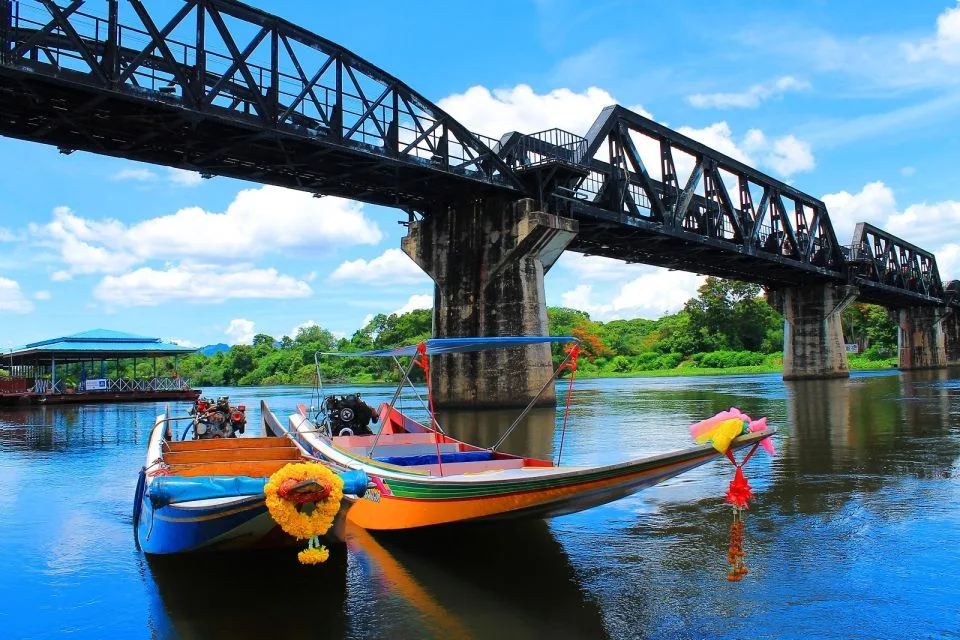
the historic bridge and the local market next to it.
estimated return to the hotel in Bangkok.
the season changes the waterfalls and the comfort
November to February, dry and relatively cool, and the most comfortable season for walking in the waterfalls and spending time outdoors.
March to May: Very hot. The waterfalls still flow, but walking in the reserve is strenuous and the water level is lower.
June to October: The rainy season. The scenery is far greener, the river full And the waterfalls at their peak. Rain in the area comes in short, intense bursts and usually doesn't cancel a stop, but the paths are slippery.
the end of the rainy season, October and November, is usually the best combination, full waterfalls and already pleasant weather.
In every season, it's worth setting out early: the floating market and the market on the tracks operate in the morning, and whoever is late arrives at a market that has already emptied out.
the distance is what's decisive
the two areas on the route are located in different directions from Bangkok: The markets are in the west, in the Samut Songkhram and Ratchaburi area, and Kanchanaburi is northwest of them. One day forces you to choose one of them.
and even within each area, time is short. The floating market operates in the early morning and fades toward noon, and Erawan Falls requires at least two hours if you want to reach the upper tiers and swim.
Over two days, each site gets its own time: the markets in the first morning, the waterfalls in the second morning, and the safari and bridge in the afternoon.
and there's another thing you can't do in one day, the accommodation in Kanchanaburi. The evening in the city is completely quiet, and the morning on the river is part of the experience, not an add-on.
seven tiers, and not all at the same level
the waterfalls are located within National park, and each of the seven tiers has a pool you can enter. The turquoise color comes from the calcium in the water and it's real.
the first three tiers are accessible to almost everyone, an organized path, a moderate climb, and wide pools. From the fourth, the path becomes steep and rocky, and the sixth and seventh require fitness and good shoes.
Most visitors reach up to the fifth and are satisfied with it, and that's a reasonable choice, the pool there is large and the waterfall is impressive.
in the pools there are garra fish that nibble lightly. This is a natural phenomenon, not a nuisance; some people enjoy it and some get out of the water.
at the entrance plastic bottles are checked, a deposit is paid for every bottle which is refunded on exit, so they don't remain in the reserve.
and why it's a memorial site and not just a photo spot
the Thailand–Burma railway was built in the years 1942–1943 by Allied prisoners of war and Asian forced laborers, under Japanese occupation. The goal was a land supply line that would bypass the sea.
The railway stretched over about415 kilometres through jungle and rock passages, and was completed within about a year, a pace bought at a human cost that's hard to grasp. That is the reason for the name it acquired.
The bridge standing today was rebuilt after the war, and you can walk on it. At the military cemetery in the city, graves are maintained of Thousands of Allied soldiers who died building it.
This is a memorial site. Photography is acceptable, but the cemetery isn't an attraction, it's a place where people search for names.
eight stops over two days
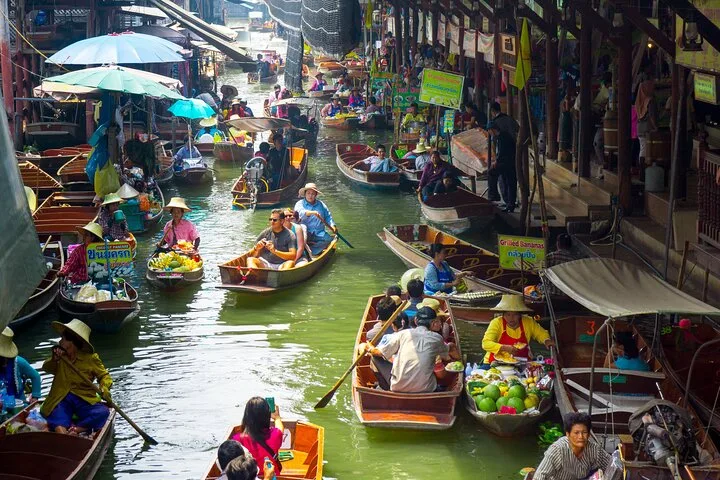
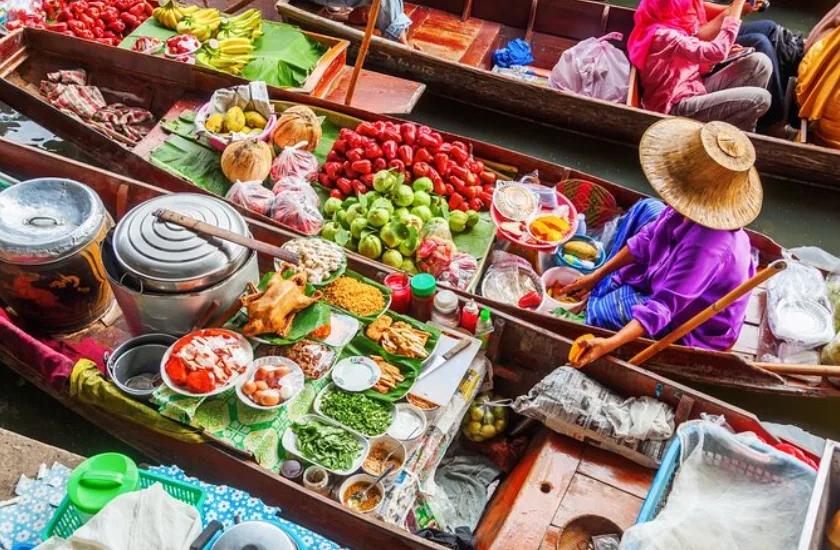
The vendor women paddle wooden boats loaded with fruit and cooked food, and sell directly from the water. Sailing among the floating stalls is the part people remember.
the stalls sit on an active track. Before the train passes, the vendors fold up canopies and pull back crates, and it passes by within centimeters. After it, everything spreads back out.
Sailing among mangrove forests at the river mouth. The monkeys are used to boats and approach them. On the way back, you pass by the oyster and crab farm.
The traditional process of producing sugar from natural coconut, with a tasting of the product.
Seven tiers, and each one has a turquoise pool you can swim in. the first three are accessible to almost everyone; the sixth and seventh require fitness and good shoes.
A two-story raft on the river. You can jump into the water, and the scenery changes along the banks.
An open bus among giraffes, zebras, and other animals. the giraffes stick their heads through the window and you can feed them.
The historic bridge of the Thailand–Burma railway, which was built by forced labor during World War II. You can walk on it, and next to it is a local market.
and the difference isn't just in price
Joint tour: join the group. Departure is subject toat least 4 participants on the same day, and if they don't gather, the tour doesn't depart and we'll let you know in advance.
Private tour, the vehicle, the driver, and your guide only. It departs regardless, regardless of the number of registrants.
This is also the explanation for the price difference: the joint tour is cheaper because it depends on others, and the private tour is more expensive because it's certain.
and in the private tour the price per person decreases as the group grows, from 6,500 for four, through 6,000 for five to six, to 5,200 for seven to nine.
fitness, accommodation, and what to bring
The tour is suitable for travelers of all ages, but requires basic physical fitness, the waterfall trail is a walk up, and the paths are rocky and wet.
the resort in Kanchanaburi is determined by the season, and its name is provided in the booking confirmation.
The big suitcase stays at the hotel in Bangkok. You take a small bag for two days with a change of clothes.
a swimsuit and towel are mandatory, there's swimming in the waterfalls and a raft on the river, and not just once.
And more: comfortable shoes with grip, a hat, sunscreen, a camera, and money for personal expenses that aren't included.



When you send an inquiry, we keep the details you provided (name, phone, email and trip details) to handle your inquiry, get back to you and for the uses you approved in the form, as set out in the Privacy policy. Beyond that, two things need your permission: Analytics of pages viewed, and Embedded content such as videos and maps that come from other services and can see your IP address.
Your choice is saved in your browser, and you can review and change it at any time in the privacy policy.