The Tiger Cave Temple
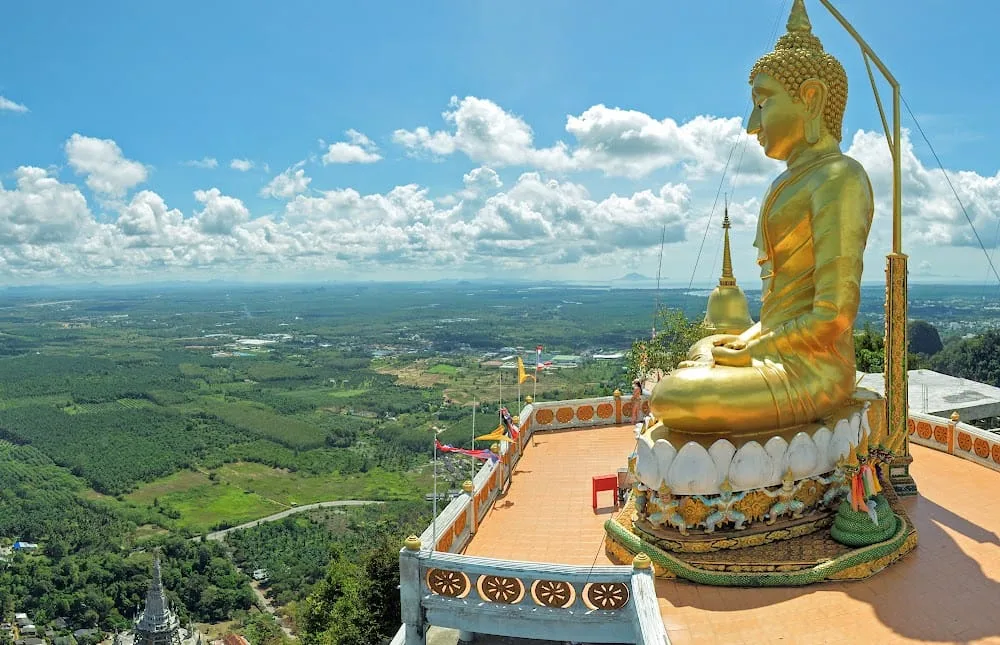
Wat Tham Suea, a temple on a hill with a gilded chedi and an open view of the valley. Many steps on the way up.
Three stops in one day: a temple on a hill with a view of the valley, the historical site of the Death Railway, and an elephant sanctuary with no riding.
Check availability and priceFrom 3,885 THB, when booked in advance.
Distance, weather, and what matters on a day like this
Kanchanaburi is about130 kilometers west of Bangkok, and the drive there takes two to two and a half hours each way, depending on the traffic leaving the city. This means a day in Kanchanaburi is A long day, an early departure and a return in the late afternoon.
The area is hot and humid most of the year. Between November and February The most comfortable weather, and between March and May it's very hot, especially on the temple stairs, which are exposed to the sun along their entire length.
In the rainy season, from June to October, the scenery is much greener and the River Kwai is full, but the rain in this area comes in short, intense bursts, so a light raincoat is a good idea.
The town itself is small and quiet, and it's the base for most of the trips in the area: Erawan Falls, Sai Yok Park, and the elephant sanctuaries that sit along the river.
Early departure, three stops, and return
A day in Kanchanaburi starts early, The drive from Bangkok takes two to two and a half hours, and those who leave late arrive at the sites at the peak of the heat and the peak of the crowds.
The first stop is usually The temple, because the stairs are easier in the morning. From there you continue to the Death Railway site, and in the afternoon to the elephant sanctuary.
This order isn't random: The sanctuary is more pleasant in the afternoon, when the elephants go down to the stream, and the temple is more pleasant in the morning.
The return to Bangkok is in the early evening hours. In total, this is A day of ten to twelve hours From the hotel door and back.
A temple, a memorial site, and a sanctuary, in one day
Wat Tham Suea, a temple on a hill with a gilded chedi and an open view of the valley. Many steps on the way up.
The historical site of the railway that was built by forced labor during World War II. A memorial site.
A sanctuary, not a riding farm, an encounter with the elephants, without riding.
and what's the difference from the two other trips to Kanchanaburi
For anyone who wants A varied day and not a day that's all history: a temple, a memorial site, and elephants on the same route.
Those who are mainly interested in The Bridge over the River Kwai and the Death Railway, the historical day trip focuses on them and costs 1,600 THB.
and those who also want the Erawan Falls and the floating market, the two-day trip to Kanchanaburi and Amphawa covers them at a more comfortable pace.
and that's the main difference in this route
There is no elephant riding in the sanctuary. The encounter is from the ground - feeding, observing, and caring - and not sitting on the elephant's back.
This is a substantial difference, not a marketing nuance, and it's worth knowing before booking. Those who want Riding will find it in Phuket and other places we sell, and not in this route.
Wat Tham Suea: the name, the stairs, and the view
The full name is Wat Tham Suea, and its literal translation is "Tiger Cave Temple". There are no tigers there, and there never were - the name comes from the cave at the base of the hill, which, according to local tradition, once served as a shelter for tigers. This is a point that surprises some visitors, and it's worth knowing before arriving with a different expectation.
The temple sits on a solitary limestone hill that rises above the plain of Kanchanaburi's rice fields, and that's its whole story: From nowhere else in the area do you see the valley like this. The gilded chedi at the summit is visible from kilometers away, and in good visibility you can identify from there the mountain range that marks the border with Myanmar.
The climb to the summit is via stairs, and there are many. Anyone who finds long flights of stairs difficult can stay on the lower level, where the main prayer hall and the large Buddha statue are, and the whole complex is open and pleasant even without the climb. The upper part is a bonus, not a requirement.
At the summit there is Bells that visitors ring, and an observation deck that surrounds the chedi. The best time is early morning: less heat, clearer air, and fewer people on the narrow stairs.
and why this site isn't an attraction but a memorial site
The Thailand–Burma railway was built in 1942–1943 by Allied prisoners of war and Asian forced labourers, under Japanese occupation. The goal was an overland supply line from Thailand to Burma that would bypass the sea.
The railway stretched over about 415 kilometers through jungle, rivers, and rock passes, and was completed within about a year - a pace that was bought at a human cost that's hard to grasp. That is the reason for the name it acquired. At the military cemetery in Kanchanaburi, the graves of thousands of Allied soldiers who died building it are maintained today.
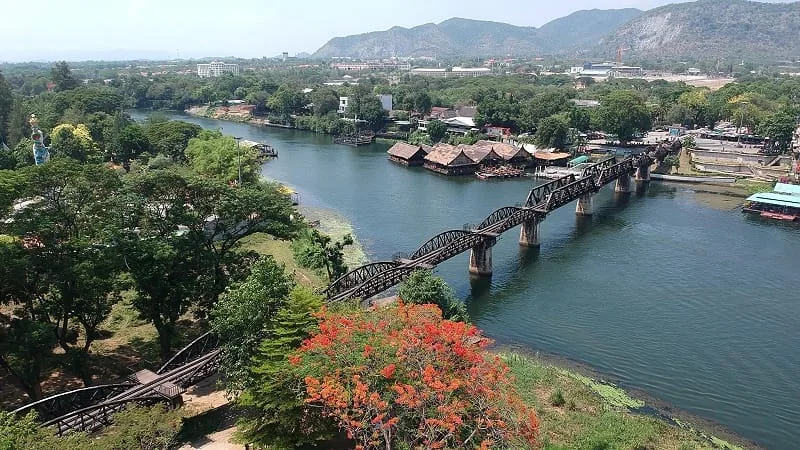
The surviving section still in operation runs along a cliff above the small River Kwai, on Wooden supports that are attached to the mountainside. This is the most photographed part of the railway, and riding on it is what most visitors remember from the day.
This is a memorial site, and you behave accordingly. Photography is allowed and accepted, but the cemetery and the information center aren't an attraction - they're a place where people look for names.
and what difference you feel on the day itself
In the encounter at the sanctuary Feet on the ground the whole time. You feed the elephants - bananas, sugar cane, watermelon - observe them, and in some programs also accompany them to the stream and bathe them.
The difference from a riding farm isn't only moral but also Practical: At the sanctuary the pace is slow, there's no line for a ride, and there's no moment where you climb onto something. Those who come with children discover that it's actually easier - there's no height limit and no seatbelts.
The elephants in sanctuaries of this type are usually Elephants that were rescued from labor, forestry, tourism, or street begging, or older elephants that have retired. Some of them carry marks from this past, and the guides tell the story of each one.
Don't bring food from home. The elephants receive a controlled diet, and what's given to them is supplied on site.
A short list that changes the day
Closed shoes with grip: for the temple stairs and the sanctuary.
Clothes you don't mind getting dirty and wet, and a change of clothes. Bathing with the elephants in the stream isn't a dry activity.
Cash For entrance fees and drinks. Most sites in the area don't have credit card terminals.
Clothes that cover shoulders and knees For the temple: for men and women.
A hat, sunscreen, and a large water bottle. Kanchanaburi is hotter than Bangkok.
What works and what less so
The sanctuary is the part that works best with children. There's no height limit, no seatbelts, and they feed and bathe at their own pace.
The temple less so. The stairs are many, and the heat at noon makes it hard. You can stay on the lower level, where the prayer hall and the Buddha statue are, and skip the climb.
ו The Death Railway site It's a memorial site, more interesting for older children who understand the context, and less for younger ones.
The day is long, so it's worth considering a private tour with young children: you can shorten it, skip parts, and return early.
Four things that change the day
Departure is early and the return in the evening. Do not plan another activity for that day.
The exact pickup time is set by the hotel location and is given with the booking confirmation.
Shoulders and knees covered: For men too.
Most of the route is outdoors, partly in the heat of the day.
When you send an inquiry, we keep the details you provided (name, phone, email and trip details) to handle your inquiry, get back to you and for the uses you approved in the form, as set out in the Privacy policy. Beyond that, two things need your permission: Analytics of pages viewed, and Embedded content such as videos and maps that come from other services and can see your IP address.
Your choice is saved in your browser, and you can review and change it at any time in the privacy policy.